
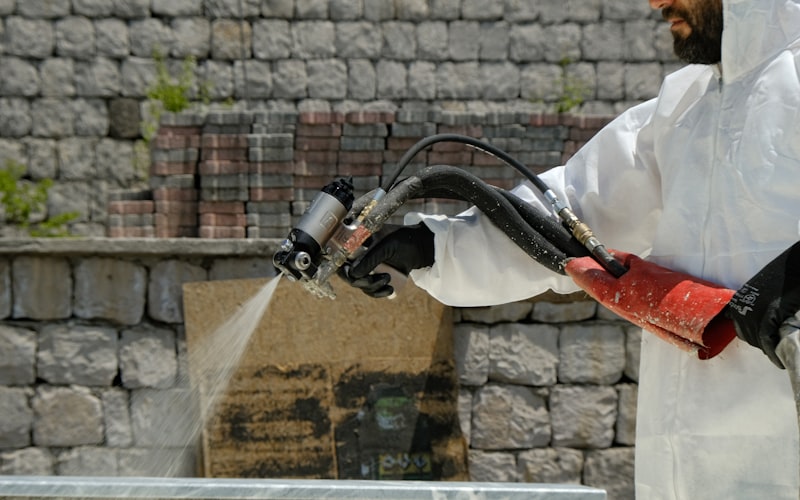
Standard general liability policies contain an absolute pollution exclusion that eliminates coverage for virtually any claim involving pollutants, contaminants, or irritants. For most roofing contractors doing standard shingle or membrane installations, this exclusion is irrelevant. But the moment your operation involves spray polyurethane foam (SPF), elastomeric coatings, solvent-based adhesives, or asbestos-containing material removal, you've crossed into territory where a pollution claim is not just possible but probable — and your GL will deny it without hesitation.
The Absolute Pollution Exclusion in Your GL Policy
Every standard ISO commercial general liability policy contains what's known as the "absolute pollution exclusion" (Exclusion f in the CGL form). It excludes coverage for bodily injury or property damage arising out of the actual, alleged, or threatened discharge, dispersal, seepage, migration, release, or escape of pollutants.
The definition of "pollutant" in the standard GL form is extraordinarily broad: "any solid, liquid, gaseous or thermal irritant or contaminant, including smoke, vapor, soot, fumes, acids, alkalis, chemicals and waste."
Read that carefully. Fumes are pollutants. Vapors are pollutants. Chemicals are pollutants. When you're spraying polyurethane foam that releases isocyanate vapors, or applying solvent-based coatings that emit VOCs, or disturbing asbestos-containing roofing materials that release fibers — all of these produce "pollutants" under the GL definition.
Courts have consistently upheld this exclusion. A building occupant claims respiratory injury from isocyanate exposure during your SPF application? GL denied — pollution exclusion. A neighboring business claims VOC fumes from your coating operation contaminated their HVAC system? GL denied — pollution exclusion. These aren't hypothetical scenarios; they're the exact claim patterns that Contractors Pollution Liability (CPL) is designed to cover.
Roofing Operations That Trigger Pollution Concerns
Not every roofing operation needs CPL. Here are the specific operations that create pollution exposure:
Spray Polyurethane Foam (SPF) Roofing: The highest-risk roofing operation from a pollution standpoint. SPF involves spraying two-component chemicals (isocyanate and polyol resin) that react and expand on the roof surface. During application, unreacted isocyanate becomes airborne. Isocyanate is a known respiratory sensitizer — exposure can cause permanent respiratory damage. Third-party claims from building occupants, adjacent property occupants, or passersby are the primary concern. A single SPF overspray incident affecting a neighboring occupied building can generate claims from dozens of people.
Elastomeric and Silicone Coating Applications: Roof coatings applied by spray, roller, or brush emit volatile organic compounds (VOCs) and can produce overspray. While less acutely dangerous than SPF, coating applications on occupied buildings can trigger complaints of headaches, respiratory irritation, and chemical sensitivity from building occupants below. Large-scale coating operations can also affect air quality for neighboring properties.
Solvent-Based Adhesives and Primers: Bonding adhesives for single-ply membrane, solvent-based primers for modified bitumen, and contact cements all produce significant VOC emissions. OSHA regulates worker exposure, but third-party claims come from building occupants exposed through HVAC intake or open windows.
Hot Asphalt (BUR) Applications: Built-up roofing with hot asphalt produces fumes, smoke, and odors. While declining in market share, BUR operations still generate pollution claims — particularly in urban environments where asphalt fumes enter adjacent buildings.
Asbestos-Containing Material (ACM) Disturbance: Many commercial roofs installed before 1985 contain asbestos in the membrane, adhesive, or flashing. Even if you're not performing licensed asbestos abatement, disturbing ACM during tear-off can release fibers. This is a significant pollution exposure that many roofers don't recognize until a $200,000 cleanup order arrives.
Lead Paint Disturbance: Flashing work on older buildings may disturb lead-containing paint on parapets, fascia, or trim. EPA RRP rules apply, and contamination claims are pollution claims under your GL.
What CPL Covers
Contractors Pollution Liability fills the gap created by the GL pollution exclusion. A typical CPL policy for a roofing contractor covers:
- Third-party bodily injury: Claims from building occupants, neighboring property occupants, or the public for injuries caused by pollution from your operations (respiratory damage from isocyanate, allergic reactions to VOCs, etc.)
- Third-party property damage: Damage to others' property from pollution you cause (coating overspray on vehicles, chemical contamination of an HVAC system, asbestos fiber contamination requiring cleanup)
- Cleanup costs: Government-mandated or voluntary cleanup of pollution conditions you create (asbestos fiber release requiring professional abatement, soil contamination from chemical spills)
- Defense costs: Legal defense against pollution-related claims, including regulatory defense (responding to EPA or state environmental agency actions)
- Transportation pollution: Spills or releases that occur while transporting materials to or from jobsites (adhesive drum falls off truck and contaminates a roadway)
- Completed operations pollution: Claims arising after you've finished the job (slow-release VOCs from installed materials causing occupant complaints weeks later)
CPL does not typically cover intentional discharge, failure to comply with known regulations, or pre-existing conditions you knew about before starting work.
When You Need It vs When You Don't
You definitely need CPL if:
- You perform SPF roofing — this is non-negotiable; the exposure is too significant
- You apply roof coatings on occupied commercial buildings
- You perform tear-offs on pre-1985 commercial buildings (potential ACM)
- You use hot asphalt (BUR) in urban environments
- Your contracts require it — many commercial contracts now require CPL for all roofing work
- You work on institutional buildings (hospitals, schools) where occupant sensitivity is heightened
You probably don't need CPL if:
- You exclusively install shingles on residential homes with no coating or foam work
- You install TPO or PVC using only mechanical fastening (no adhesives)
- You work exclusively on unoccupied buildings
- You never disturb existing roofing materials (overlay only on known non-ACM buildings)
The gray area: contractors who primarily do standard membrane work but occasionally apply coatings or encounter ACM. If these operations represent even 10-15% of your work, carry CPL. The premium is modest compared to the exposure.
Cost and Coverage Structure
Claims-made vs. occurrence: CPL is predominantly sold on a claims-made basis, meaning the policy responds to claims reported during the policy period, regardless of when the pollution event occurred. This is different from your GL, which is typically occurrence-based. The practical implication: if you cancel your CPL and a claim surfaces later for work you performed while covered, you have no coverage unless you purchased an extended reporting period (tail).
Some carriers offer occurrence-based CPL at a premium of 25-50% more than claims-made. For roofing contractors, occurrence-based is preferable if available because pollution claims often surface months or years after the work is performed.
Typical limits:
- $1M per pollution condition / $2M aggregate is standard
- $2M/$4M available for larger operations
- Higher limits available but rarely needed for roofing operations
Cost ranges:
- Standard roofing contractor (coatings, adhesives, potential ACM): $2,500-$6,000/year for $1M/$2M
- SPF contractor: $5,000-$15,000/year depending on volume and claims history
- Large commercial with full coating/foam operations: $8,000-$20,000/year
Deductibles: Typically $5,000-$25,000 per pollution condition. Higher deductibles ($25,000-$50,000) are available for premium reduction of 15-25%.
Assessing Whether Your Operations Require CPL
Review your last 12 months of projects. Did any involve coatings, foam, hot asphalt, solvent-based adhesives, or tear-off of materials that could contain asbestos? If yes, you have pollution exposure that your GL policy specifically excludes. The cost of CPL — typically $3,000-$10,000 for most roofing operations — is insignificant compared to a single uninsured pollution claim that could easily reach $100,000-$500,000 in cleanup costs and bodily injury settlements. Carriers that write CPL for roofing contractors include Zurich, Berkley Environmental, Great American, and several Lloyd's syndicates. Your broker should be able to quote CPL alongside your other coverages — if they can't, they may lack the environmental market access you need.