
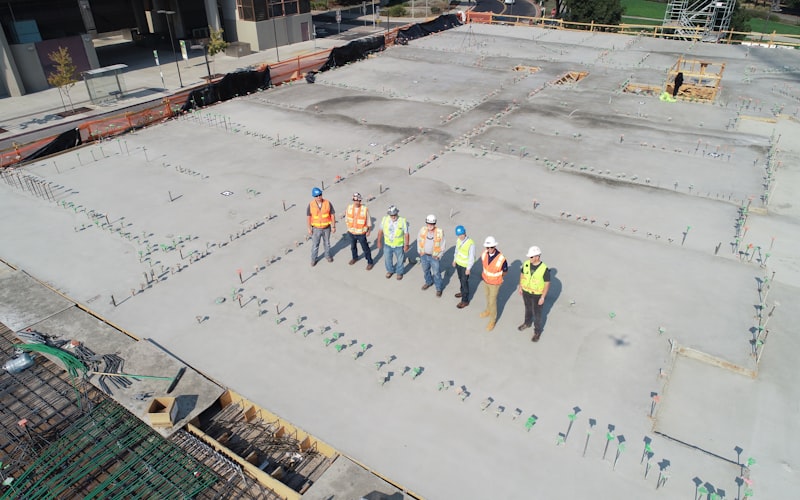
Adding a second crew is one of the most significant growth milestones for a roofing contractor. It means you have enough demand to justify the additional labor, enough operational maturity to manage two job sites simultaneously, and enough confidence in your systems to delegate daily production to a crew leader. What it also means is that your insurance costs are about to change substantially, and how you structure that growth determines whether the premium increase is manageable or devastating.
The insurance math behind adding a second crew is not as simple as doubling your headcount. Workers compensation, general liability, commercial auto, and umbrella coverages all respond differently to crew expansion. Understanding how each line reacts to payroll growth, the distinction between W-2 employees and subcontractors, and the mechanics of mid-term endorsements will help you scale your business without getting blindsided at audit time.
How Payroll Growth Hits Your Workers Comp
Workers compensation is directly tied to payroll. There is no way around this. When you add a second crew, you are adding payroll, and your workers comp premium will increase proportionally. The formula is straightforward: your rate per $100 of payroll, multiplied by your total payroll, multiplied by your experience modification factor, equals your premium.
For roofing class codes, the rates are already among the highest in the workers comp system. Depending on your state, you may be paying anywhere from $15 to $45 per $100 of payroll for roofing operations. Adding five workers at an average annual payroll of $50,000 each adds $250,000 to your payroll base. At a rate of $25 per $100, that is $62,500 in additional workers comp premium. If your experience mod is above 1.0, it is even more.
The key to managing this increase is accuracy in payroll reporting and classification. Make sure your new crew members are classified under the correct class codes. If you have a dedicated crew leader who splits time between job site supervision and office-based estimating, the portion of their payroll attributable to clerical or estimating work can be classified under a lower-rated code. But the split must be documented with time records that can withstand audit scrutiny. A carrier auditor will not accept a verbal estimate that your foreman spends 30% of their time in the office.
Report your payroll accurately at policy inception. Some contractors underreport payroll to keep their initial premium low, planning to deal with the audit adjustment later. This is a bad strategy. The audit adjustment comes due as a lump sum, often at the worst possible time, and it includes the additional premium plus any audit fees. Worse, significant underreporting can trigger a short-rate cancellation or a decline to renew, which makes you harder to place with your next carrier.
If you know you are adding a second crew mid-term, contact your agent immediately. They can process a payroll change endorsement that adjusts your premium incrementally over the remaining policy term rather than leaving the entire adjustment for the audit. This smooths out your cash flow and keeps you in good standing with your carrier.
GL Per-Project vs Annual Aggregate Considerations
Your general liability policy has two critical limits: the per-occurrence limit and the aggregate limit. The per-occurrence limit is the maximum the policy will pay for any single claim. The aggregate is the maximum the policy will pay for all claims during the policy period. When you are running one crew on one job at a time, your aggregate is less of a concern. When you are running two crews on two jobs simultaneously, aggregate management becomes essential.
Consider this scenario: your policy has a $1 million per-occurrence limit and a $2 million aggregate. Crew A causes a fire that damages an adjacent property, resulting in a $750,000 claim. Two weeks later, Crew B drops material off a roof onto a parked car, generating a $50,000 claim. You have now used $800,000 of your $2 million aggregate with ten months left in your policy period. Two more significant claims and your aggregate is exhausted, leaving you without GL coverage for the remainder of the term.
The solution for multi-crew operations is a per-project aggregate endorsement, sometimes called a dedicated project aggregate. This endorsement provides a separate aggregate for each project rather than sharing one aggregate across all projects. If Crew A has a large claim on Project A, the aggregate for Project B remains intact. This endorsement adds cost to your premium, typically 10% to 20%, but it is essential for any contractor running simultaneous operations.
General contractors and commercial property owners increasingly require per-project aggregates in their subcontractor insurance requirements. If you are bidding on commercial work, you will likely need this endorsement regardless. Adding it proactively demonstrates to your clients that you understand risk management and are structured to handle multiple concurrent operations.
The Sub Crew vs W-2 Crew Insurance Math
When adding a second crew, you face a fundamental structural decision: hire W-2 employees or engage a subcontractor crew. Both approaches have legitimate business reasons, and both have distinct insurance implications.
If you hire W-2 employees, their payroll flows directly into your workers comp and GL premium calculations. You control training, supervision, safety protocols, and quality standards. You also bear all the insurance cost directly. The premium impact is transparent and predictable: more payroll equals more premium, calculated at your existing rates and experience mod.
If you engage a subcontractor crew, the insurance math changes. A legitimate subcontractor should carry their own workers comp and GL coverage. You should obtain a certificate of insurance from the sub before they start work, verify the certificate is valid by contacting the issuing agent or checking the carrier portal, and require the sub to name you as an additional insured on their GL policy.
Here is where contractors get into trouble: if your sub does not carry workers comp, or if their workers comp policy lapses during the project, your carrier will pick up their payroll at audit time and charge you the premium. This is not a penalty or a gotcha. Your workers comp policy has a provision that covers uninsured subcontractor labor as if they were your employees. The carrier calculates the premium based on the sub estimated payroll at the highest applicable roofing rate. This can add tens of thousands of dollars to your audit.
The 1099 versus W-2 classification question also matters. If you are treating workers as independent contractors but they fail the IRS or state classification tests, meaning you control when, where, and how they work, they may be reclassified as employees. In states like California, with strict AB 5 requirements, or in states that use economic reality tests, misclassification can result in back taxes, penalties, and retroactive insurance premium adjustments.
The honest insurance math is this: a legitimate subcontractor with their own coverage can be less expensive from a pure insurance perspective because their payroll does not hit your policies. But the savings only hold if the sub genuinely carries and maintains their own insurance throughout the project. If they lapse, or if they were never properly insured to begin with, the cost shifts to you and often exceeds what you would have paid to insure W-2 employees directly.
Mid-Term Endorsements Done Right
When you add a second crew, do not wait until renewal to update your insurance. Contact your agent and request mid-term endorsements to reflect your expanded operations. The endorsements you may need include a payroll change endorsement on your workers comp, a revenue or subcontractor cost adjustment on your GL, additional vehicles on your commercial auto policy, and possibly additional equipment on your inland marine or equipment floater.
Mid-term endorsements are processed by your carrier and result in a premium adjustment for the remaining policy term. The additional premium is typically pro-rated, so if you add your second crew six months into a 12-month policy, you pay roughly half the annual additional premium for the remaining term.
Do not skip the auto policy update. If your second crew needs a truck and trailer, those vehicles must be scheduled on your commercial auto policy before they hit the road. Hired and non-owned auto coverage is not a substitute for scheduling owned vehicles. If your crew leader drives a company truck that is not listed on your auto policy and causes an accident, your coverage may be denied.
The umbrella policy also needs attention. Your umbrella or excess liability coverage sits over your GL, auto, and sometimes your workers comp employers liability. When you increase your underlying limits or add vehicles, your umbrella carrier needs to know. Failure to report changes to your umbrella carrier can create a gap between where your primary coverage stops and your umbrella coverage begins.
Growth is good. Unmanaged growth is expensive. Take the time to work with your agent on a scaling plan that aligns your insurance program with your operational expansion. The premium increase from adding a second crew is a cost of doing business, but with proper planning, it is a cost you can budget for and manage rather than a surprise that hits you at the worst possible time. Talk to a roofing insurance specialist before you bring on that second crew.