
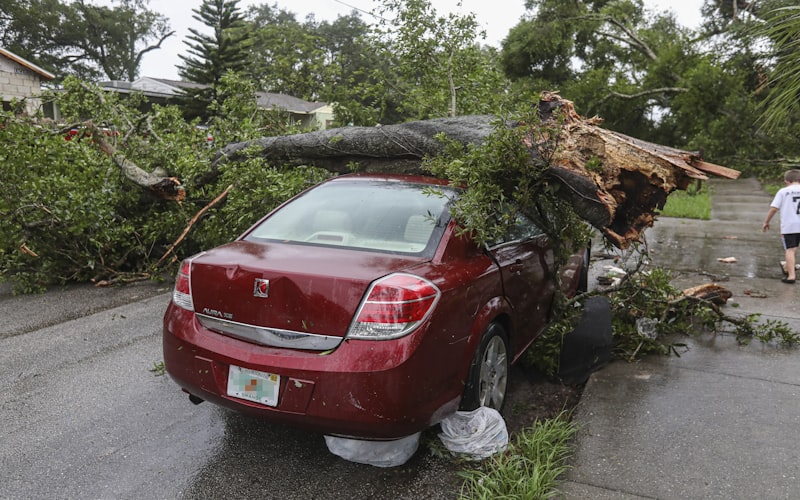
When Hurricane Ian made landfall near Cayo Costa, Florida on September 28, 2022 as a Category 4 storm, it became one of the costliest natural disasters in American history. Total insured losses exceeded $60 billion. For Florida roofing contractors, the storm was both a massive business opportunity and a brutal insurance education. The contractors who thrived in the aftermath had the right coverage in place before the storm. The contractors who struggled learned expensive lessons about gaps they never knew existed. Those lessons remain relevant for any roofer working in a hurricane-prone state.
Equipment and Vehicle Losses
The first wave of losses for roofing contractors was their own equipment and vehicles. Before you can repair anyone else's roof, you need your trucks, trailers, lifts, compressors, nail guns, and material inventory intact. Hurricane Ian destroyed or damaged thousands of commercial vehicles and millions of dollars in contractor equipment across Southwest Florida.
Commercial auto policies cover hurricane damage under the comprehensive coverage component. But several issues caught contractors off guard. Vehicles parked in flood zones were often total losses, and comprehensive coverage pays actual cash value, not replacement cost. A 2019 Ford F-350 with 80,000 miles might have an ACV of $35,000, but replacing it in the post-hurricane market cost $55,000 or more because demand for trucks spiked overnight. Contractors who carried stated value or agreed value endorsements on their fleet were in a far better position.
Inland marine and contractors equipment policies were the other critical line. Tools and equipment stored at job sites, in open trailers, or at the contractor's yard were destroyed by wind and storm surge. Contractors with inland marine policies that covered equipment at any location, including unnamed job sites, were able to replace their tools quickly. Those with coverage limited to scheduled locations or with low blanket limits found themselves underinsured.
The biggest lesson: review your equipment schedule annually and make sure the total insured value reflects current replacement costs, not what you paid for the equipment three years ago. Post-hurricane pricing for construction equipment can spike 30-50% due to demand, and your policy pays based on your scheduled values, not the inflated market price.
Workers Comp Under Disaster Conditions
Post-hurricane roofing work is exponentially more dangerous than normal operations. Crews are working on damaged structures with compromised decking. Debris is everywhere. Power lines are down. Workers are fatigued because they are pulling 12 to 16 hour days in extreme heat. All of these factors increase the frequency and severity of workers compensation claims.
After Ian, Florida roofing contractors saw a significant spike in workers comp claims related to heat exhaustion, falls from weakened roof structures, cuts from debris, and vehicle accidents caused by road hazards. Contractors who ramped up their workforce by bringing in out-of-state crews or hiring temporary labor faced additional complications.
Workers comp is state-specific. If you are a Georgia roofing company that sends crews to Florida for storm work, you need Florida workers comp coverage. Your Georgia policy may not automatically extend to Florida, depending on your other-states coverage endorsement. Several out-of-state contractors learned this the hard way when claims were denied because the injury occurred in a state not listed on their policy.
The premium implications were also significant. Post-storm overtime pay is included in workers comp payroll calculations in most states. If your crews are working 60-hour weeks for three months straight, that overtime payroll inflates your premium base. Some states allow you to exclude the overtime premium (the difference between regular pay and time-and-a-half), but you need to track it separately in your payroll records. Contractors who did not segregate overtime pay ended up paying workers comp rates on inflated payroll at audit.
The Assignment of Benefits Problem
Florida's Assignment of Benefits (AOB) environment has been a disaster within the disaster for years, though recent legislative reforms have started to address it. Under AOB, a property owner signs over their insurance claim rights to a contractor, who then deals directly with the property owner's insurance carrier for payment. In theory, this simplifies the process. In practice, it created a litigation industry.
After Hurricane Ian, the AOB dynamic created several problems for roofing contractors:
- Payment delays. Carriers overwhelmed with claims were slow to process AOB claims, leaving contractors waiting months for payment on completed work. Some contractors financed $500,000 or more in completed work waiting for carrier payment.
- Supplement disputes. Carriers routinely denied supplemental claims for additional work discovered after the initial estimate. Contractors who had already completed the work were stuck with the cost difference.
- Litigation costs. When carriers denied or underpaid AOB claims, the only recourse was litigation. Attorney fees consumed a significant portion of the recovery, and cases took years to resolve.
The 2023 Florida tort reform legislation (SB 2-A and HB 837) significantly restricted AOB practices and eliminated one-way attorney fee provisions in property insurance cases. For roofing contractors working in Florida today, this means the AOB model is far less viable than it was pre-Ian. Contractors need to adjust their business model to work on direct contracts with property owners rather than relying on AOB assignments for payment.
The insurance lesson: do not build your post-storm business model on AOB unless you have the cash reserves to finance completed work for 6 to 12 months while claims are processed. And carry sufficient general liability coverage to protect against claims from property owners who allege the repair work was defective. Post-storm repair disputes generate a disproportionate number of GL claims because work is often rushed under difficult conditions.
Carrier Stability and the Post-Storm Market
Hurricane Ian pushed several Florida-domiciled insurance carriers into insolvency. Citizens Property Insurance, the state's insurer of last resort, saw its policy count surge past 1.4 million. For roofing contractors, carrier instability created a domino effect.
When a property insurance carrier becomes insolvent, the claims it owes on existing policies get transferred to the Florida Insurance Guaranty Association (FIGA). FIGA pays claims, but subject to statutory caps and significant delays. Roofing contractors who performed work under AOB agreements with insolvent carriers found themselves in a queue behind thousands of other claimants with no guarantee of full payment.
The contractor insurance market was also disrupted. Several carriers that wrote roofing contractor liability and workers comp in Florida pulled out of the market entirely after Ian, citing unsustainable loss ratios. Contractors who had been with the same carrier for years suddenly needed to find new coverage in a market with fewer options and higher rates. Premium increases of 25% to 40% were common across the board for Florida roofing contractors in the 2023 renewal cycle.
What contractors can learn from this going forward:
- Diversify your carrier relationships. Do not put all your coverage with a single carrier, especially a small Florida domestic. Spread your lines across carriers with strong AM Best ratings (A- VII or better).
- Maintain a relationship with a surplus lines broker. When the standard market tightens, the E&S market becomes the only option. Having an existing relationship means faster placement when you need it.
- Build cash reserves. Post-storm markets mean higher premiums, larger deductibles, and slower claim payments. Contractors without cash reserves are forced to accept whatever terms the market offers.
- Document everything before the storm. Photograph your equipment, inventory your tools, and keep copies of all policies and endorsements in a location accessible after a storm (cloud storage, not a filing cabinet in your office). Filing a claim is infinitely easier when you have documentation ready.
Hurricane Ian was a defining event for the Florida roofing industry. The contractors who came out ahead were the ones who treated insurance as a core business function rather than an afterthought. If you work in a hurricane-prone region and want to make sure your coverage will hold up when the next storm hits, schedule a policy review before hurricane season, not after.