
You finish a roof. Two months later the property owner calls: it is leaking. You send a crew back to find the problem, fix the flashing, replace some underlayment, and stop the leak. Then you wonder whether your general liability insurance covers any of this. The answer is complicated, and it is one of the most misunderstood areas of insurance for roofing contractors. Your GL policy does not work the way most contractors think it does when it comes to callbacks and warranty work. Understanding the boundaries of coverage can save you from making expensive assumptions about what your policy will and will not pay for.
The Your Work Exclusion
Every standard commercial general liability policy contains an exclusion commonly known as the "your work" exclusion. In ISO policy language, it is Exclusion L under Coverage A (bodily injury and property damage liability). This exclusion eliminates coverage for property damage to "your work" arising out of your work or any part of it. In plain English: if you install a roof and the roof itself is defective, your GL policy will not pay to fix or replace the defective roof.
This exclusion exists because insurance is designed to cover fortuitous losses, not the cost of doing your work correctly. If a roofer could install a roof poorly and then file an insurance claim to have the carrier pay for the redo, insurance would become a guarantee of workmanship rather than a risk transfer mechanism. The premium system is not designed to support that.
So when you get a callback for a leak caused by your crew's installation error, the cost of sending a crew back to fix the flashing, replace the defective shingles, or reseal the penetrations comes out of your pocket. The labor, the materials, the truck roll, the overhead: all yours. This is a business expense, not an insurable loss.
Most roofing contractors understand this intuitively, even if they have never read their policy. You would not expect your insurance to pay for a re-roof because your crew did it wrong. But the confusion arises around the edges, specifically around what happens when the defective roof work causes damage to something other than the roof itself.
Resultant Damage: What IS Covered
Here is where GL coverage becomes relevant for leak callbacks. While the "your work" exclusion prevents coverage for repairing or replacing the defective roofing work itself, the policy does cover damage to other property that results from the defect. This is called resultant damage or consequential damage.
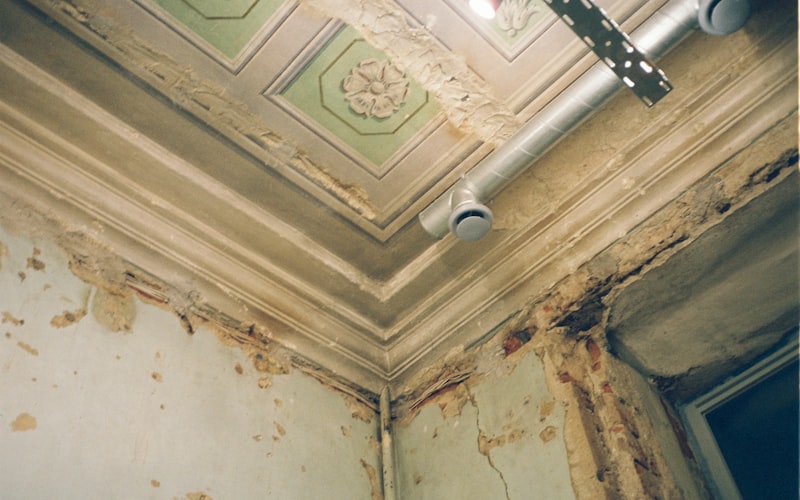
Consider this scenario: You installed a roof on a commercial office building. Your crew failed to properly seal around a plumbing vent. Six months later, water intrudes through the unsealed penetration during a rainstorm. The leak damages the ceiling tiles, drywall, carpet, and a computer server in the office below. Here is how coverage breaks down:
- Not covered: The cost to tear out and reseal the plumbing vent penetration. This is your work, and it is excluded.
- Covered: The cost to replace the damaged ceiling tiles, drywall, carpet, and computer server. These are third-party property damaged as a result of your defective work. This is what your GL policy is designed to cover.
The distinction seems clean in theory, but it gets messy in practice. Carriers and policyholders routinely argue about where "your work" ends and "resultant damage" begins. If the leak damaged the roof decking under the shingles you installed, is the decking "your work" or "other property"? If you installed a complete roofing system including underlayment, shingles, and flashing, and the flashing fails causing damage to the underlayment, are both components "your work"?
Courts have reached different conclusions on these questions depending on the jurisdiction. In some states, the "your work" exclusion is interpreted narrowly, and anything beyond the specific component that failed is considered other property. In other states, the exclusion is applied broadly to the entire scope of work under the contract. Knowing how your state's courts interpret this exclusion is important because it determines the practical scope of your completed operations coverage.
The Subcontractor Exception
There is a critical exception to the "your work" exclusion that benefits roofing companies who use subcontractors. The standard ISO GL policy includes an exception stating that the "your work" exclusion does not apply if the damaged work or the work out of which the damage arises was performed on your behalf by a subcontractor.
This is called the subcontractor exception, and it effectively restores coverage for defective work performed by your subs. If you hire a subcontractor to install flashing and their flashing work is defective, causing both the flashing to fail and the surrounding roofing system to be damaged, the subcontractor exception may allow your GL policy to cover the damage, including the cost to repair or replace the sub's defective work.
The rationale is that when a sub performs defective work, it is analogous to a product failure: you contracted for a service, the service was defective, and the defect caused damage. The carrier treats it differently than your own employees' work because you had less direct control over the sub's methods.
However, the subcontractor exception only works if:
- The sub is genuinely a subcontractor, not a misclassified employee. If the "sub" is really your employee, the exception does not apply.
- The policy has not been modified to remove the exception. Some carriers, particularly in the surplus lines market, modify the GL policy to eliminate the subcontractor exception. Read your policy carefully, specifically Exclusion L and any endorsements that modify it.
- The sub's work is the source of the damage. If your own employees did the defective work and the sub's work was fine, the exception does not apply even though subs were involved on the project.
For roofing companies that use subs extensively, the subcontractor exception is one of the most valuable provisions in the GL policy. It provides a layer of protection against defective sub work that would otherwise be entirely your financial responsibility. When evaluating GL policies from different carriers, confirm that the subcontractor exception is intact and has not been modified or removed by endorsement.
Warranty Obligations vs Insurance Obligations
Many roofing contractors offer workmanship warranties ranging from 2 years to 10 years or more. Some also sell manufacturer warranties that extend 25 to 50 years. These warranties create contractual obligations that are completely separate from insurance coverage, and confusing the two is a common and costly mistake.
Your workmanship warranty is not insured. When you promise a customer that you will come back and fix any defects for 5 years, that promise comes out of your operating budget. Your GL policy does not fund warranty repairs. If you install 200 roofs a year and your callback rate is 8%, that is 16 warranty calls per year that you are financing yourself. If each callback costs $500 to $2,000 in labor and materials, you are looking at $8,000 to $32,000 annually in warranty expenses that are purely a cost of doing business.
Manufacturer warranties have their own terms. When you sell a GAF Golden Pledge or an Owens Corning Platinum warranty, the manufacturer is backing the material performance, and sometimes the labor if you qualify for their contractor program. These warranties are not connected to your GL policy. If a manufacturer warranty claim arises, the process goes through the manufacturer's warranty department, not through your insurance carrier.
The intersection of warranties and insurance occurs when a warranty callback reveals damage that goes beyond the roofing system. If you respond to a warranty call for a leak and discover that the leak has caused $40,000 in interior water damage to the property owner's building, the warranty covers your obligation to fix the roof. Your GL completed operations coverage potentially covers the $40,000 in interior damage. These are two separate obligations addressed by two separate mechanisms.
Smart roofing contractors budget for warranty exposure separately from insurance premiums. A reasonable warranty reserve is 1% to 3% of gross revenue, depending on your callback rate and the type of work you do. Commercial flat roofing typically has higher callback costs than residential steep-slope work because the systems are more complex and the consequences of failure are greater.
Also consider this: your warranty obligation can extend beyond your GL policy's completed operations coverage period. Standard GL policies provide completed operations coverage for claims made during the policy period, regardless of when the work was performed. But if you cancel your GL policy or switch carriers, you may lose coverage for prior work. If you offered a 10-year warranty but your GL carrier only provides coverage while the policy is in force, there is a gap in years 6 through 10 if you are no longer with that carrier.
The bottom line: GL is not a warranty backstop. It is a liability policy that responds to third-party property damage and bodily injury caused by your work. The cost of fixing your own defective work is always your responsibility. The cost of fixing damage your defective work caused to other people's property is where GL steps in. If you are unclear about where your policy draws these lines, have your agent walk through the exclusions with you. It is a 30-minute conversation that can prevent a six-figure misunderstanding.