
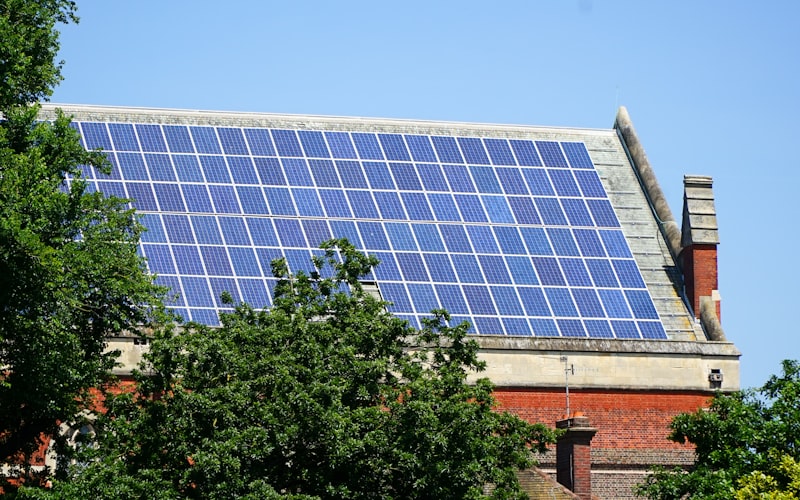
The convergence of roofing and solar installation is reshaping the contractor insurance landscape. If you're a roofer adding solar capability—or a solar installer who handles the roofing work—your insurance program needs to address both exposures simultaneously. This isn't a matter of simply adding an endorsement to your existing roofing policy. Solar installation introduces electrical exposure, high-value equipment risk, professional liability for system design, and contractual requirements from manufacturers and developers that go beyond standard roofing insurance.
How Carriers Classify Solar Roofing Work
The classification challenge begins with the fact that insurance carriers haven't fully standardized how they rate combined roofing/solar operations. You may encounter:
Dual class codes: Some carriers assign separate class codes for your roofing work and your solar work. Roofing falls under standard codes (NCCI 5551 or 5553), while solar installation may be classified under electrical wiring (NCCI 5190), solar equipment installation, or a contractor code for alternative energy systems. Each code carries different rates.
Blended classification: Other carriers classify your entire operation under whichever represents the greater exposure—typically roofing, since it carries the higher hazard grade. This simplifies rating but may not accurately reflect your exposure profile.
Revenue allocation issues: If your GL is revenue-rated, you'll need to separate solar revenue from roofing revenue if they carry different rates. A $3M operation that does $2M in roofing and $1M in solar has a different premium than if the full $3M is rated at roofing class rates.
The critical point: your policy must explicitly acknowledge both operations. If you started as a roofer and added solar—or vice versa—your carrier needs to know. Undisclosed operations give the carrier grounds to deny claims arising from the undisclosed work. Get an endorsement or policy amendment that specifically lists both roofing and solar installation as covered operations.
GL Considerations for Solar Installation
Adding solar to roofing work introduces general liability exposures that don't exist in conventional roofing:
Property damage to solar equipment: Solar panels range from $200-$500 each, and a typical residential installation involves 20-40 panels ($4,000-$20,000 in materials). Commercial installations can involve hundreds of panels worth $100,000+. Damage to panels during installation—dropped modules, improper racking that causes cracking, electrical damage from incorrect wiring—creates first-dollar property damage claims at higher per-incident values than typical roofing materials.
Electrical fire exposure: Incorrectly wired solar systems can cause electrical fires days, weeks, or months after installation. This is a completed operations exposure with potentially catastrophic consequences—a house fire or commercial building fire traced back to your solar installation wiring.
Roof penetration damage: Solar racking systems require roof penetrations for mounting. If those penetrations aren't properly sealed—or if the racking system shifts and compromises the roof membrane—water intrusion claims follow. This intersects roofing and solar liability simultaneously.
Third-party electrical injury: If a homeowner, maintenance worker, or firefighter is injured by a solar system you installed (due to improper disconnect labeling, conductor routing, or grounding), the bodily injury claim comes back to your GL policy.
Completed operations tail: Solar panels carry 25-year warranties and expected service lives of 30+ years. Your completed operations exposure extends across that entire period—far longer than conventional roofing's 10-20 year exposure window.
Professional Liability for Design-Build Solar
If your company designs solar systems—selecting panel configurations, calculating electrical loads, specifying inverters, engineering racking layouts—you have professional liability (errors and omissions) exposure that standard GL does not cover.
GL covers damage from faulty workmanship. Professional liability covers damage from faulty professional advice, design, or engineering. The distinction matters when:
- A system you designed underperforms because you miscalculated roof orientation, shading, or panel capacity. The owner claims lost energy production revenue.
- Your electrical design causes a system failure that damages the inverter, batteries, or connected building systems.
- A structural engineering question arises—did the roof structure support the added load of the solar array? If your company certified structural adequacy and the roof deflects or fails, that's a professional liability claim.
- You specified equipment that proves defective or inappropriate for the application, and the client holds you responsible for the recommendation.
Professional liability (E&O) policies for solar contractors typically cost $3,000-$15,000 annually depending on revenue, limits, and design complexity. Common limits are $1M per claim / $1M aggregate, though larger design-build firms may need $2M-$5M. This coverage is claims-made, meaning you need to maintain it continuously—including after you stop performing design work—to cover claims from past projects.
Installation Floater for Solar Equipment
Solar equipment represents significant material value concentrated at job sites and in transit. A standard GL policy doesn't cover your own property—it covers damage you cause to others' property. You need an inland marine policy (installation floater or contractor's equipment floater) that covers:
- Materials in transit — Solar panels on your truck or a delivery vehicle between the supplier and job site.
- Materials at the job site — Panels, inverters, racking, electrical components staged on-site before installation.
- Materials during installation — Coverage until the system is operational and accepted by the owner.
- Theft — Solar panels are attractive theft targets due to high value and easy resale. Job site theft of staged materials is a real and recurring loss.
An installation floater for a solar roofing operation typically covers $50,000-$500,000 in materials per project, depending on your operation size. Premiums are usually 1-3% of the coverage limit annually. If you're handling multiple installations simultaneously with $100,000+ in materials staged across several sites, this coverage is essential.
Some installation floaters include coverage for testing and commissioning damage—if a system is damaged during startup testing before handover, the floater responds. Without this, you'd be absorbing the replacement cost of damaged equipment out of pocket.
Workers Comp for Combined Roofing/Electrical Work
Workers compensation for combined roofing/solar operations requires careful class code management. Your employees face two distinct hazard profiles:
Roofing exposure (NCCI 5551): Falls, heat illness, repetitive motion, struck-by incidents. Rates range from $15-$50+ per $100 of payroll depending on state and EMR.
Electrical exposure (NCCI 5190 or similar): Electrical shock, arc flash, burns, falls from height. Rates are typically lower than roofing—$8-$25 per $100 of payroll—because while electrical work is hazardous, the claim frequency is lower than roofing.
The classification question is whether your crews perform both functions or whether you have dedicated roofing crews and dedicated solar/electrical crews. If crews are separated and perform distinct functions:
- Roofing crew payroll goes to the roofing code at the higher rate
- Electrical/solar crew payroll goes to the electrical code at the lower rate
- You save meaningful premium on the split
If the same crews perform both roofing and electrical work, most carriers will assign all payroll to the highest-rated applicable code (roofing). The governing class rule generally requires that employees who perform multiple functions be classified under the highest-rated classification that applies to their work.
Unique WC exposures for solar installation:
- Electrical shock injuries—DC systems are always energized when exposed to sunlight, creating shock hazard even during installation
- Arc flash potential during electrical connection work
- Repetitive lifting injuries from carrying panels (40-55 lbs each) up ladders or across roofs
- Ergonomic injuries from panel mounting positions
- Combined fall + electrical hazard (falling while handling live conductors)
Contract Requirements from Solar Manufacturers and Developers
Solar manufacturers and project developers impose specific insurance requirements that often exceed standard roofing contract specs:
Manufacturer warranty requirements: To install under manufacturer warranty (and become a certified installer for brands like Tesla, SunPower, Enphase, etc.), you typically need:
- $2M+ general liability limits (sometimes $5M)
- Professional liability / E&O coverage
- Specific additional insured language naming the manufacturer
- Workmanship warranty insurance or bonds
Developer and EPC requirements: If you subcontract to solar developers or engineering/procurement/construction (EPC) firms, their insurance specs often include:
- $5M-$10M umbrella limits
- Pollution liability for battery storage installations
- Professional liability for any design scope
- Installation floater covering materials up to full project value
- Performance bond and payment bond requirements
- Specific per-project aggregate endorsements
- Cyber liability if you're integrating monitoring systems
Utility interconnection requirements: Working with utilities on grid-connected systems may require additional insured status for the utility, specific liability limits, and sometimes pollution liability for battery storage systems.
These requirements can push your total insurance spend significantly higher than a pure roofing operation of similar revenue. Budget 4-8% of revenue for insurance (compared to 3-5% for conventional roofing) when operating combined roofing/solar programs.
Building the right insurance stack for combined roofing and solar operations isn't about finding one policy that does everything—it's about layering complementary coverages that address each distinct exposure. GL for third-party damage, WC for employee injuries, professional liability for design errors, installation floater for equipment value, pollution liability for battery storage, and umbrella coverage tying it all together at limits that satisfy your contracts. Work with an agent who understands both the roofing and renewable energy insurance markets to assemble this program efficiently.